A message regarding potential network disruption for patients with Aetna insurance.
What to Expect
Lung cancer is the leading cause of cancer-related deaths in Arkansas, often because it isn't found until it has spread. At Baptist Health, we use Low-Dose Computed Tomography (LDCT) to detect lung cancer in its earliest, most treatable stages—long before symptoms appear.
What is a Low-Dose Lung Screening?
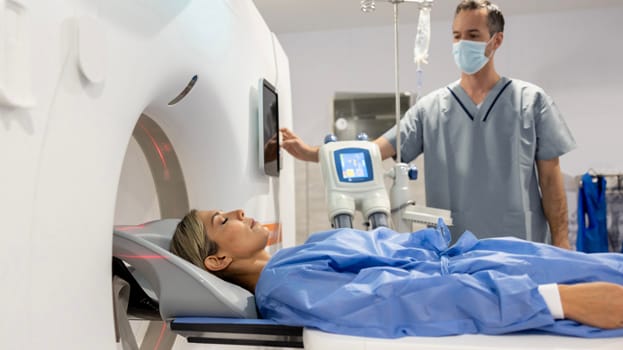
A low-dose CT scan (also called a spiral CT) uses specialized X-ray technology to create detailed, 3D pictures of your lungs. Unlike a standard CT, a "low-dose" scan uses up to 90% less radiation, making it a safe and effective tool for annual screening.
- Painless & Non-invasive: No needles, no dyes, and no special preparation.
- Fast: The scan itself takes less than 10 minutes.
- Precision: It can detect tiny abnormalities (nodules) that a standard chest X-ray might miss.
Do I Qualify for a Lung Screening?
Insurance providers, including Medicare and Medicaid, typically cover the cost of annual screenings if you meet specific high-risk criteria.
You may be eligible if you meet the following:
- Age: 50–77 (Medicare/Medicaid) or 55–80 (most private insurances).
- Smoking History: You have a 20 pack-year smoking history (e.g., 1 pack a day for 20 years, or 2 packs a day for 10 years).
- Current Status: You currently smoke or have quit within the past 15 years.
- Symptoms: You must be asymptomatic (no current cough, chest pain, or unexplained weight loss), and no signs or symptoms of cancer.
What Happens if an Abnormality is Found?
If your scan shows a nodule, our radiologists use a standardized coding system called Lung-RADS. This score helps your doctor determine if you need to return in a year or if further testing is required sooner.
Frequently Asked Questions
Take the Next Step
Early detection is the most powerful tool we have against lung cancer. If you meet the criteria above, speak with your primary care physician about a referral to Baptist Health Imaging, or Find a Baptist Health Provider Near You.
